
Almost all of us want to learn how to better handle our money. Which is why November is the perfect time to learn what financial literacy actually is.
Personal finance affects a ton of areas in your life—from buying a slice of pizza, to saving up for a new bike, to landing your first part-time job, to filing your first tax return. These are all skills we need to master.
That’s why we’re going back to basics and breaking down what financial literacy is, plus advice on how to earn, save, spend, and invest your own money.
What is Financial Literacy Month in Canada?
Financial Literacy Month takes place each November in Canada. It was established by the Canadian government in 2011 to support financial education and empower Canadian families to manage their money and debt, save for the future, and make better decisions when it comes to finances.
In 2026, the theme “Talk Money” encourages open conversations about finances—especially for teens and families. Led by the Financial Consumer Agency of Canada (FCAC), the campaign focuses on having purposeful conversations about the financial moments that shape confidence and well-being.
What does financial literacy mean?
Financial literacy is the ability to save, grow, and protect your money. It’s the foundation for making informed financial decisions throughout your life—from everyday spending to long-term planning. Like any skill, it takes time to learn; once you learn the alphabet, you can’t expect to pick up a novel.
Financial literacy is also a skill that pays off. Canadian 15-year-olds scored 519 on the OECD’s PISA 2022 financial literacy assessment—21 points above the OECD average and among the top results globally, alongside Denmark and the Netherlands. Yet 13% of Canadian students still don’t reach the baseline level of proficiency, meaning they can identify common financial products but struggle with more complex decisions.
The gap between understanding and practice starts early. According to Mydoh’s 2026 Financial Resilience Report, 55% of Canadian kids handle money independently before age 12 and 55% of parents feel their child is well-prepared to manage money when they leave home. And 92% of Canadians agree that financial literacy is lacking in high schools, according to the Financial Resilience Institute’s June 2025 data.
Because it’s hard to imagine it now, but one day 65-year-old you will be grateful that 18-year-old you started saving for retirement.
Use code FINLIT10 to get $10 in your Mydoh account when you sign up
*terms and conditions apply
What is the 2026 Financial Literacy Month theme?
The 2026 Financial Literacy Month theme is “Talk Money”. The campaign encourages Canadians to have purposeful conversations about money and the financial moments that influence their confidence and well-being. Talking about money can help people better understand their options, learn from others, access trusted information, and feel more confident making financial decisions.
For teens, this theme is an invitation to start money conversations at home, with friends, and with trusted adults. Reducing the stigma around talking about money, whether it’s about budgeting, debt, investing, or financial mistakes.
Talk Money conversation starters for teens
Not sure how to get the conversation going? Try these:
- With a parent or guardian: “How did you learn to manage money when you were my age?” or “What’s one financial decision you wish you’d made differently?”
- With a friend: “Are you saving up for anything right now?” or “Do you track your spending at all?”
- With a trusted adult or mentor: “What’s the one money habit you think everyone should start in their teens?”
- With yourself: “What’s one thing I spent money on this week that I needed—and one thing I just wanted?”

How to earn money as a teen
Earning money is the first step in building financial literacy. For teens, that often means a part-time job, freelance work, or an allowance. According to Mydoh’s 2026 Financial Resilience Report, 35% of parents regularly give their kids an allowance, down from 47% in 2024, meaning more teens are earning their own money through work rather than receiving it.
Here are common ways teens can earn money:
| Method | Best for | Things to know |
| Part-time job (retail, food service) | Steady income, work experience | You’ll need a Social Insurance Number (SIN) to work legally in Canada |
| Babysitting or pet sitting | Flexible hours, neighbourhood work | Start with people you know and build references |
| Tutoring | Strong students, online or in-person | Set your rate based on subject and grade level |
| Freelance digital skills (design, coding, social media) | Teens with creative or technical skills | Use platforms like Fiverr or Upwork; ask a parent to help set up the account |
| Allowance | Younger teens learning money basics | Treat it like a paycheck—budget it, don’t just spend it |
When you start earning, you’ll likely encounter your first tax return. If you earn over the basic personal amount set by the Canada Revenue Agency (CRA) in a tax year, you need to file taxes. Even if you earn less, filing can get you refunds and benefits you’re entitled to.

How to save money as a teen
Saving money means setting aside a portion of what you earn for future goals—whether that’s a new phone, a trip, or an emergency fund. The habit matters more than the amount: saving consistently, even small sums, builds the discipline you’ll need for bigger financial decisions later in life.
A simple framework is the 50/30/20 rule:
| Percentage | Category | What it covers |
| 50% | Needs | Essentials you can’t avoid—transportation, phone bill, school supplies |
| 30% | Wants | Things you’d like but don’t need—snacks, games, entertainment |
| 20% | Savings | Money set aside for future goals or emergencies |
For teens, the “needs” category may be smaller, which means you can adjust the split—maybe 30% needs, 30% wants, and 40% savings while you’re living at home. The point is to build the habit of paying yourself first: put money into savings before you spend anything else.
According to the Fidelity Young Canadian Study (2025), 58% of young Canadians don’t know the difference between saving and investing. Understanding that distinction is key: saving is for short-term goals and safety, while investing is for long-term growth.

How to spend money wisely
Spending money wisely means understanding the difference between needs and wants, and making intentional choices rather than impulse purchases. It’s the day-to-day side of financial literacy—where most of your money actually goes.
Needs vs. wants
| Needs | Wants |
| Groceries and meals you need to eat | Takeout and restaurant meals |
| School supplies | Brand-name versions of the same supplies |
| Transportation to school or work | Rideshare when transit or walking works |
| A phone for communication and safety | The newest phone model when your current one works fine |
A practical approach is the 24-hour rule: when you want to buy something that isn’t a need, wait 24 hours before purchasing. If you still want it the next day and it fits your budget, go for it. Often, the urge passes.
According to Mydoh’s 2026 Financial Resilience Report, 1 in 3 Canadian parents (34%) say they step in to fix the situation when their child makes a money mistake, such as overspending savings or making an impulsive purchase they regret. Learning to pause before spending is a skill that pays off for life.

How to start investing as a teen
Investing is putting your money into assets—like stocks, bonds, or funds—with the goal of growing it over time. Unlike saving, which keeps your money safe and accessible, investing involves some risk but offers the potential for higher long-term returns. Starting early gives your money more time to grow through compound interest.
Canadian teens are already thinking about investing. According to the 2025 Fidelity Young Canadian Study, 60% of Canadian teens aged 15–17 think it’s important to learn how to start investing, and 65% of young Canadians aged 18–34 are highly interested in investing. Yet 59% of teens have negative emotions when they think about investing, and 54% identify as beginners or novices.
Saving vs. investing: what’s the difference?
| Saving | Investing |
| Money held in a savings account or GIC | Money placed in stocks, ETFs, mutual funds, or other assets |
| Low risk—your money is protected | Higher risk—values can go up and down |
| Lower returns | Potential for higher returns over the long term |
| Best for short-term goals (under 3–5 years) | Best for long-term goals (5+ years, like retirement) |
| Accessible when you need it | May need to sell assets to access your money |
In Canada, teens under 18 can start investing with a parent or guardian opening a custodial account on their behalf. Some brokerages offer accounts specifically for minors. Once you turn 18, you can open your own account and, if you have contribution room, use a TFSA (Tax-Free Savings Account) to invest without paying tax on the growth.
The most important thing about investing as a teen isn’t how much you invest—it’s starting. Even small amounts invested consistently over time can grow significantly thanks to compound interest.
How to protect yourself from financial scams and fraud
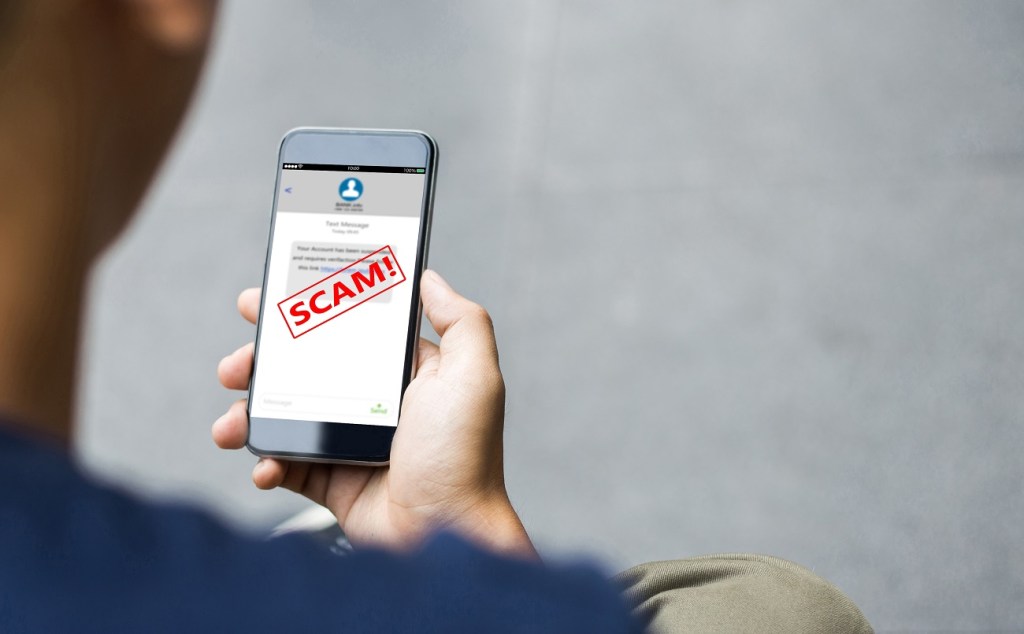
Financial scams are attempts to steal your money or personal information, and they increasingly target teens and young adults through social media, text messages, and online platforms. Fraud awareness is a key focus of Financial Literacy Month 2026, with the FCAC campaign highlighting that anyone can be a victim of fraud regardless of age, education, or income.
Common scams that target teens
| Scam type | How it works | How to protect yourself |
| Phishing | Fake texts or emails pretending to be from your bank, the CRA, or a delivery service | Never click links in unsolicited messages; log in directly to the official site |
| Fake investment schemes | Social media posts promising high returns with no risk (“get rich quick”) | If it sounds too good to be true, it is. Real investing involves risk |
| Fake job offers | Offers that ask you to pay upfront for training or “equipment” | Legitimate employers don’t ask you to pay to work |
| Online marketplace scams | Buyers or sellers who want to deal outside the platform or use unusual payment methods | Stick to the platform’s payment system; meet in public for local sales |
| Identity theft | Someone uses your personal info to open accounts or make purchases in your name | Never share your SIN, bank details, or passwords with anyone you don’t know |
If you think you’ve been scammed, tell a trusted adult right away. You can also report fraud to the Canadian Anti-Fraud Centre. The sooner you act, the more likely you can limit the damage.
Why digital financial literacy matters
Digital financial literacy is the ability to manage money safely in an increasingly online world. It covers everything from using banking apps and digital wallets to recognizing online scams and understanding how financial technology works. The National Financial Literacy Strategy (2021–2026) identifies digital financial literacy as a priority for children and youth.
For teens, this means:
- Online banking safety: Use strong, unique passwords and enable two-factor authentication on all financial accounts.
- Digital wallets and payment apps: Understand how Apple Pay, Google Pay, and peer-to-peer payment apps work—and what protections they do and don’t offer.
- Cryptocurrency awareness: Crypto is highly volatile and largely unregulated in Canada. Understand the risks before considering any involvement, and never invest money you can’t afford to lose.
- Social media and money: Be wary of financial influencers (“finfluencers”) offering investment advice. Verify any advice against credible sources before acting on it.
How money affects mental health
Financial stress and mental health are closely connected. Worrying about money can cause anxiety, affect sleep, and strain relationships. The Mental Health Commission of Canada links Financial Literacy Month to overall well-being, noting that talking openly about money can reduce stigma and help people feel more confident managing financial challenges.
For teens, this connection is real. If you’re stressed about money, you’re not alone—and talking about it is the first step. The 2026 “Talk Money” theme is specifically designed to break the silence around financial struggles.
If money worries are affecting your mental health, consider:
- Talking to a parent, guardian, school counsellor, or trusted adult
- Reaching out to a free support service like Kids Help Phone (text 686868 or call 1-800-668-6868)
- Breaking the problem into small, manageable steps—a budget, a savings goal, a conversation
The bottom line
Financial Literacy Month is about building money skills that last a lifetime. In 2026, the “Talk Money” theme reminds us that the most powerful financial tool isn’t an app or a spreadsheet—it’s a conversation. Whether you’re asking a parent how they learned to manage money, talking through a savings goal with a friend, or asking a trusted adult about investing, every conversation builds your financial confidence.
Start with one conversation this November. Your future self will thank you.
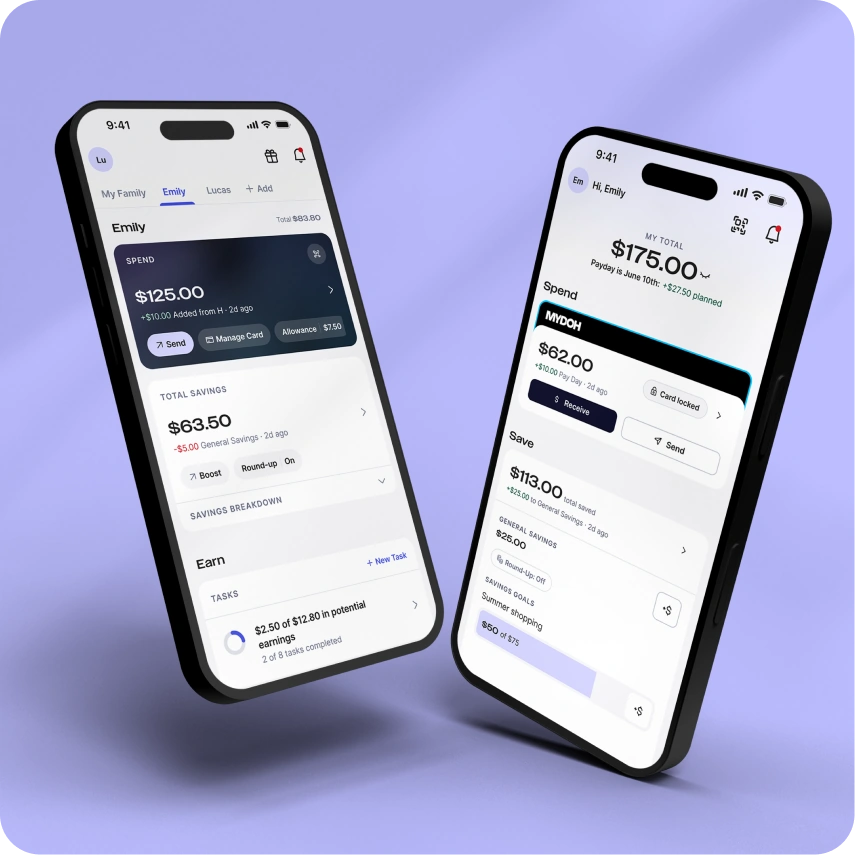
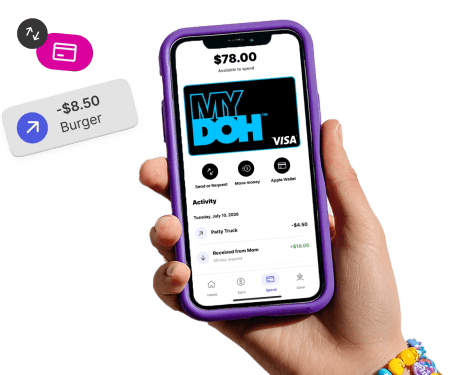
Download the Mydoh app to help kids and teens build confidence to manage their money and grow to become financially independent.
This article offers general information only and is not intended as legal, financial or other professional advice. A professional advisor should be consulted regarding your specific situation. While the information presented is believed to be factual and current, its accuracy is not guaranteed and it should not be regarded as a complete analysis of the subjects discussed. All expressions of opinion reflect the judgment of the author(s) as of the date of publication and are subject to change. No endorsement of any third parties or their advice, opinions, information, products or services is expressly given or implied by Royal Bank of Canada or its affiliates.