
One of the greatest gifts that you, as a parent, can give your kids is the money talk. And just like with that other talk, tweens and teens aren’t always receptive to what parents have to say — whether it’s about consent or compound interest. But as teens become more independent and think about life after high school, it’s just as important for them to learn about financial literacy as it is to do their own laundry.
At this age, kids are starting to earn their own money — and not just through traditional jobs like babysitting or shovelling snow. Many teens are earning through resale platforms like Depop and Vinted, content creation on TikTok and YouTube, or digital freelancing using AI tools. Learning how to make sound money decisions now will help give teens the confidence to make better decisions tomorrow — especially when the financial landscape looks very different than it did even five years ago.
What is financial literacy?
Financial literacy can be defined as “the ability to use knowledge and skills to manage financial resources effectively for a lifetime of financial well-being.” In short: It’s knowing how to save, grow, and protect your money. Being financially literate helps with paying bills on time, managing student debt, and saving up for life’s big milestones. And like any skill, the earlier you learn, the more mastery you’ll acquire.
Where’s the best place to learn financial literacy?
There’s no better place to talk about practical money skills and financial literacy for teens than as a family at home, so kids can ask questions — and make mistakes — in a safe space. After all, no one is more interested in kids’ financial futures than their parents.
Why is financial literacy important?
1. It gives kids accurate information
Not teaching your kids about money now can have repercussions down the line. While teens are taught aspects of financial literacy at school, they may also absorb incorrect information from friends, peers, or other adults in their lives with poor money-management skills. And in 2026, there’s a new source of misinformation: social media “finfluencers” who promise get-rich-quick schemes, crypto tips, and investment advice that’s often unregulated and sometimes outright fraudulent. When parents are the primary source of financial education, kids get accurate, age-appropriate information from someone who actually has their best interests at heart.
2. It helps them understand the difference between needs and wants
As adults, we know the difference between what we need (food, a place to live, clothing) and what we want (concert tickets, a new gaming console, the latest phone).
But for tweens and teens, it can be easy to confuse a need with a want — especially when the “wants” are woven into their daily digital lives. In-game currency and V-Bucks, stacked streaming subscriptions, fast-fashion hauls, and expensive concert and festival tickets all compete for your teen’s dollars. And with inflation a fact of life for today’s teens — many of whom have only ever known high prices — the lesson of budgeting and saving hits differently than it did a few years ago.
By teaching kids about money, you’ll help them learn how to balance needs and wants without going into debt. Older teens may want to go on a trip with friends, but with even a little financial literacy, they’ll understand that this is a “want” they may need to budget and save for.
Tip: Teens can use our free savings goal calculator to see how many weeks it will take to save for the things on their wish list.
3. It teaches kids and teens the value of money
As a parent, you’ve probably said, “Money doesn’t grow on trees!” at least once. Unless there’s a trust fund in your teen’s future, chances are they will have to work for their money. While younger kids can earn a few bucks for doing chores, by the time they’re tweens, many kids start earning their own money through a wider range of options than ever before.
Reselling on platforms like Depop, Vinted, and Poshmark has quietly become one of the most consistent teen income streams. Content creation on TikTok, YouTube Shorts, and Instagram Reels can generate income through creator funds and brand deals, though it takes time to build an audience. Some teens are also freelancing digitally — designing, editing video, or even building AI-powered tools for clients. And traditional jobs like babysitting, mowing lawns, and walking dogs are still alive and well.
Teaching financial literacy sets the stage for smart money decisions now, which helps lead to better decisions with bigger payouts — regardless of where that first paycheque comes from.

4. It shows teens how money can work for them
By the time they’re in their early teens, kids may be ready to understand the power of investing and making their money grow through compound interest. Advanced financial literacy conversations could revolve around what different investment choices look like, such as lower-risk investments or higher-risk stocks.
But there’s a new conversation parents need to have: the difference between investing and gambling. The GameStop and meme stock era made trading feel like a game, and gamified trading apps use confetti animations and push notifications to make every trade feel exciting. Crypto is everywhere on social media, and teens hear about it constantly — from Bitcoin to the latest memecoin trending on TikTok. The reality is that social media “investment advice” is not personalized, not regulated, and often wrong. Help your teen understand that putting money into a speculative crypto token because a TikToker told them to is gambling, not investing.
One way your teen can get practice in investing is through an RBC Practice Account. Wannabe Wall Street bankers can practise buying and selling investments, including stocks and ETFs (exchange-traded funds), track their holdings, and see how they are performing in real time. And don’t underestimate the power of family game night. Classic board games like Monopoly and Pay Day are always fun to play and can reinforce the financial education you’re giving them now.
5. It allows teens to practise financial independence—with a safety net
Allowing your tween or teen to pay for their own designer jeans or expensive running shoes will actually help empower them to take charge of their finances as they move through life.
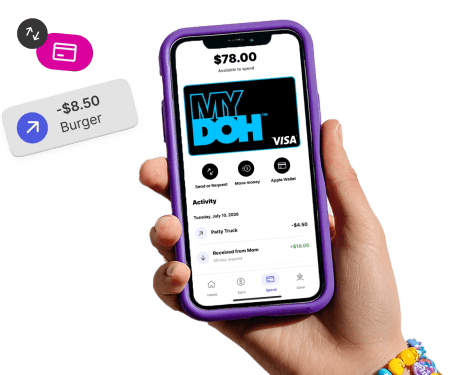
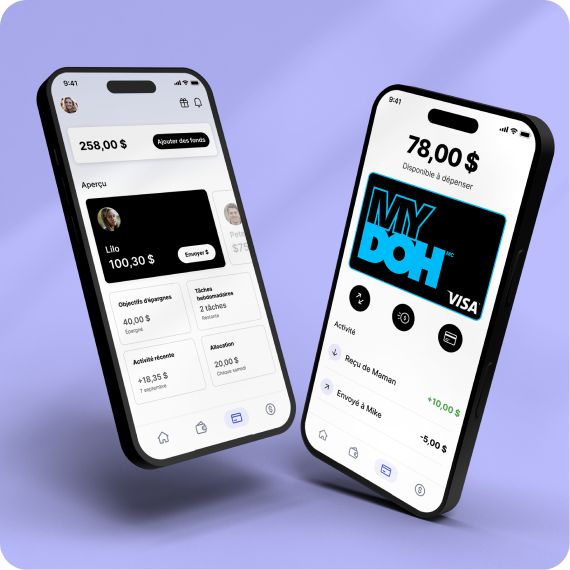
One way parents can teach practical money skills safely and securely is with the Mydoh app, which comes with a Smart Cash Card. Mydoh is designed to give kids the real-world experience of making and spending their own money. Your tween or teen can gain financial skills by making their own decisions on what to buy — and how much to spend on it — while you coach them along the way.
For instance, instead of giving kids tickets to a game and then spending money on top of that, with Mydoh, parents can transfer a set amount of funds to their kids’ Smart Cash Card. Then your teen can decide how to spend their entertainment dollars: tickets and takeout, or tickets and some cool merch? It’s up to them.
6. It helps teens learn how to avoid debt
Does the thought of your teen hitting the mall or shopping online with a credit card in their name fill you with dread? Talking about credit is vital in helping tweens and teens understand the importance of money and the consequences of making poor financial decisions. If your teen asks for a credit card, instead of giving an automatic “no,” help them understand that it’s not free money. Stress that a credit card should be paid in full each month because otherwise they will have to pay interest, which can end up costing them much more than the original purchase price — not to mention locking them into a cycle of debt.
But there’s a new debt trap parents need to know about: Buy Now, Pay Later (BNPL). Services like Klarna, Afterpay, and Affirm have moved aggressively toward younger users and are now baked into checkout flows for things teens buy — sneakers, electronics, concert tickets. BNPL splits a purchase into four instalments and is often pitched as “interest-free.” It’s essentially debt dressed up as easy payments.
The numbers tell the story. According to the U.S. Federal Reserve, 16% of all adults used BNPL in 2025, with usage increasing steadily since 2021. A 2026 survey by PartnerCentric found that 68% of Gen Z now use BNPL, and 39% of Gen Z respondents said their BNPL usage had increased drastically over the previous two years. Over a third of Gen Z BNPL users are still racking up debt, according to YPulse research. The risk is real: missed payments can lead to late fees, debt collection, and damage to a young person’s credit profile before they even realize they have one.
If your teen isn’t convinced about the dangers of debt, run the numbers through an online credit-card-interest calculator to show just how quickly credit-card debt can add up — and have the same conversation about BNPL.
7. It teaches teens how to spot a scam
Teens are constantly online, which means they’re vulnerable to cybercriminals who target kids. But the threat landscape has evolved dramatically since this article was first published, and the old advice of “don’t open suspicious links” is no longer enough.
AI deepfake scams are now a reality. Scammers can clone a person’s voice from just a few seconds of audio posted online — and use it to impersonate a family member in distress, demanding money urgently. The FBI recorded 22,364 AI-related fraud complaints and $893 million in losses in 2025 alone, tracking AI-related fraud as its own category for the first time. While older adults have been the primary targets, the technology is increasingly being used against younger victims too.
The risk to young Canadians is especially high. A 2026 Payments Canada study found that nearly half (47%) of Gen Z Canadians aged 18–24 experienced some type of scam involving attempted theft or loss of money in the past 12 months — significantly higher than the 30% general population average. Over a quarter (26%) of Gen Z Canadians lost money to fraud, double the 13% of the general population. And according to a 2026 Scotiabank poll, 29% of young Canadians aged 18–34 said they fell for a scam in the past year, despite being the most confident age group in their ability to spot AI-generated fraud.
Help your teen avoid scams by teaching them:
Question everything before buying. It’s okay to ask questions before making a purchase, such as “What is your return policy?” Also encourage tweens and teens to do a little research before purchasing, such as comparing prices and reading online reviews — while being aware that AI-generated fake reviews and fake product listings are now common.
Protect account information and passwords. Never share login credentials, even with friends.
Be sceptical of urgent money requests. If a family member or friend is suddenly asking for money via text or call, verify by calling them back on a number you already have. AI can clone voices, so a callback on a known number is the best defence.
Watch for “finfluencer” scams. Crypto giveaways, “send me $10 and I’ll send back $100” schemes, and fake investment gurus are rampant on TikTok and Instagram. If it sounds too good to be true, it is.
Be careful in gaming environments. Discord, Roblox, and in-game trades are where many kids first encounter scammers. Teach them never to share personal or financial information in these spaces.
8. Because the future is coming
Getting a head start on money management skills will help set your teen up for fast-approaching independence. A financial education should cover the importance of credit scores, which will become an issue sooner than your teen realizes. A credit score is based on factors such as how much debt you have and whether you pay your bills on time. Bad credit scores in early adulthood could prevent teens from renting accommodation while they’re in university or getting a cellphone plan — and missed BNPL payments may show up on credit reports too.
Kids and teens also need to learn how to be self-sufficient. Having them do regular household chores is one way parents can teach kids how to fend for themselves. Whether you are giving them a pure allowance (a set amount at regular intervals with no conditions), a chore-based allowance, or a hybrid of the two types, financial literacy will give teens the freedom to control their own money and empower them to make better decisions.
Why it’s important for parents to share personal money lessons
Effective money management starts at home, and one of the most powerful things parents can do is share their own money lessons — including the mistakes. Did you rack up credit card debt in your twenties? Tell them about it. Did you wish you’d started saving earlier? Say so. Real stories from parents make financial literacy tangible in a way that no textbook or app can.
The earlier you start talking to your kids about financial literacy, the more confident they’re likely to be with money as adults. A 2026 Bank of America study found that 81% of Gen Z say it’s important to be perceived as financially responsible, and fewer are relying on family for financial assistance — down from 46% in 2024 to 34% in 2026. That’s encouraging, but it also means teens are navigating money decisions on their own earlier than ever. Having finance smarts is something that will serve your kids throughout their lives and help set them up for a bright future as financially responsible adults.
The financial literacy bottom line
The earlier you start talking to your teen about financial literacy, the more resilient and better protected from financial stress they’re likely to be. Having finance smarts is something that will serve your kids throughout their lives and help set them up for a bright future as financially responsible adults.
Download Mydoh and help build a foundation of financial literacy for your kids and teenagers today.
This article offers general information only and is not intended as legal, financial or other professional advice. A professional advisor should be consulted regarding your specific situation. While the information presented is believed to be factual and current, its accuracy is not guaranteed and it should not be regarded as a complete analysis of the subjects discussed. All expressions of opinion reflect the judgment of the author(s) as of the date of publication and are subject to change. No endorsement of any third parties or their advice, opinions, information, products or services is expressly given or implied by Royal Bank of Canada or its affiliates.