
Here’s what teens need to know about value-based spending — and how to make sure their money goes where it actually matters.
Key takeaways
- Value-based spending means directing money toward what genuinely matters to you — not just what’s in front of you at the moment.
- A simple values check before buying can significantly reduce impulse spending and buyer’s remorse.
- Building a values-based budget doesn’t mean cutting out fun — it means being deliberate about what “fun” looks like for you.
- The gap between knowing good money habits and actually using them is real: Mydoh’s 2026 Financial Resilience Report found that 83% of Canadian parents say their child understands the importance of saving for goals, but only 64% regularly work toward them.
- Social media is making this harder — 61% of Canadian parents are concerned about how influencer culture is shaping their kids’ relationship with money.
Knowing how to spend money wisely is genuinely hard — especially for teens navigating social pressure, digital wallets, and a steady stream of things algorithmically designed to make them want stuff. From the latest fashion drops to in-app purchases to concert tickets, the friction between earning and spending has never been lower.
So what actually helps? One framework that holds up well is value-based spending — the idea that money decisions feel better and stick longer when they reflect what you care about, not just what’s in front of you right now.
What Is value-based spending?
Value-based spending simply means allocating money based on what’s genuinely important to you. It sounds simple, but the gap between knowing it and doing it is significant. Mydoh’s 2026 Financial Resilience Report — the first of its kind for Canadian youth — found that while most kids understand the concept of saving toward goals, fewer than two-thirds are actually doing it consistently.
That gap isn’t a character flaw. It’s largely a habit gap, and habits are built through practice, not lectures.
Everyone’s values around money look a bit different. One teen might prioritize spending on experiences, like concerts, travel, and food with friends. Another might put their money toward gear for a hobby, or saving for something bigger down the road. Neither is wrong. The point is that intentional spending tends to generate more satisfaction than reactive spending — and less of that “I spent how much this month?” feeling.

How to align spending with your values
1. Figure out what actually matters to you
The first step is just getting honest about priorities. That might mean thinking through categories like tech, entertainment, clothing, food, sports, social experiences, or savings goals — and ranking which ones genuinely matter versus which ones you spend on out of habit or social pressure.
A good prompt: If you had $200 to spend this month with zero outside input, where would it go? The answer usually reveals more than any budgeting app.
It’s also worth separating your values from externally imposed ones. A 2025 TD survey [1] found that 39% of Canadian parents worry about how easy digital wallets make it for kids to spend impulsively, and the ease of spending is a real factor. When buying something takes one tap, the friction that normally creates a “do I actually want this?” pause disappears.
2. Review what you’ve actually been spending
Looking at three months of real transactions is usually more clarifying than any theoretical exercise. Go through recent purchases and rate each one: did it deliver? Was it worth it? Does it reflect something you actually care about?
This kind of review tends to surface low-value spending fast — the subscriptions you forgot about, the impulse buys that didn’t land, the delivery fees for things you could have grabbed yourself. Cutting those doesn’t require discipline so much as awareness.
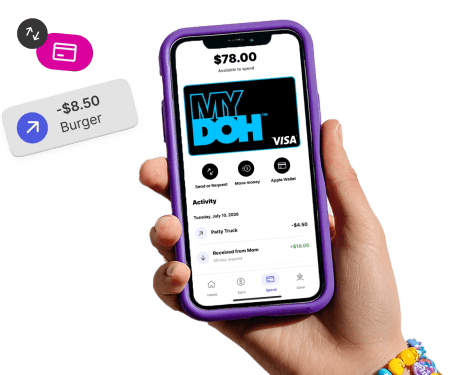
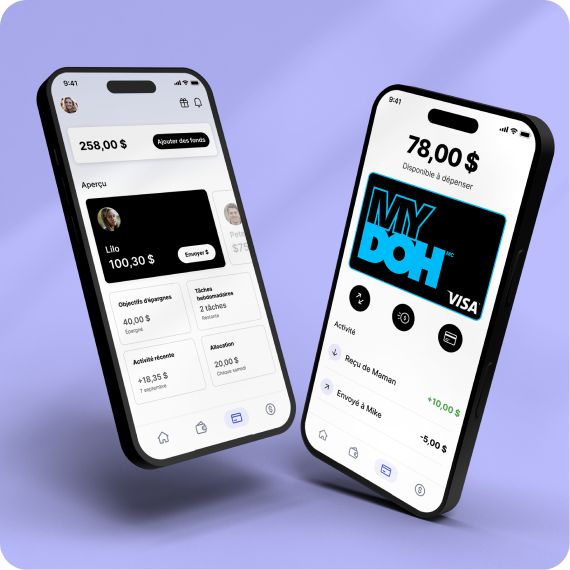
If tracking tools are available (Mydoh for example, lets users view spending history directly in the app), that makes the review process a lot easier.
3. Apply the want vs. need filter (without overdoing It)
The wants-vs-needs framework is a classic for a reason: it works. Needs are non-negotiables, like food, transit, phone, clothing basics. Wants are everything else.
That said, this filter doesn’t have to be rigid. Spending on experiences, hobbies, and social connection isn’t frivolous. In fact, research consistently links experiential spending to higher reported satisfaction than spending on things. The point isn’t to cut wants, it’s to be conscious about which wants are worth prioritizing.
A useful tweak: before committing to a purchase, ask would I still want this in 48 hours? The 2026 EverFi State of Teen Financial Literacy Report, based on data from over 161,000 students, highlights that teens who develop pre-purchase habits — pausing before buying — demonstrate meaningfully better financial outcomes over time.
4. Budget for fun intentionally
One reason budgets fail is that they treat discretionary spending as a threat rather than a line item. A more practical approach: decide upfront how much “fun money” you have per month and treat it as fully spendable. No guilt, no justification required — as long as it’s within that allocation.
This approach works because it removes the mental load of evaluating every small purchase. The decision was already made. What’s left is just enjoying it.
Canada’s Financial Consumer Agency (FCAC) frames this kind of intentional allocation as a core component of financial well-being — the idea that financial health isn’t just about restriction, but about confidence and control over spending decisions.

Building a values-based budget: A simple framework
Once the values piece is clear, building a budget around them is fairly straightforward. Here’s a practical structure:
Step 1 — Calculate income. Add up all money coming in: part-time job earnings, allowance, gifts, any other sources.
Step 2 — Review recent spending. Three months of transactions is enough to see patterns. Look for both the categories you’re spending on and where the surprises are.
Step 3 — Cover needs first. Any non-negotiable expenses — transit, phone, food contributions — get allocated before anything else. This removes financial anxiety and frees up the rest for intentional allocation.
Step 4 — Add values-aligned spending. These are the categories that reflect what actually matters: a sports league, books, music equipment, a savings fund for travel. Giving these a real budget line makes them feel legitimate rather than guilty.
Step 5 — Set aside savings toward a goal. Mydoh’s 2026 report points to a clear opportunity here — the knowledge-to-action gap with savings goals. One way to close it: make the goal concrete and visible. Saving for “the future” is abstract. Saving $600 for a specific trip or camera by September is not.
Step 6 — Leave guilt-free spending money. Whatever’s left after needs and savings is genuinely free to spend. This is the fun money bucket — no tracking required.
A practical starting split for teens with income from a part-time job or allowance: 20% savings, 30% needs, 40% wants, 10% giving or emergency buffer, a framework outlined by WealthNorth’s 2026 guide to teen financial literacy in Canada.
Why this approach works
The benefits of values-based spending go beyond just saving money. Spending intentionally tends to reduce decision fatigue, lower the emotional weight of money stress, and build real financial confidence over time.
That last point matters. Only 38% of Canadian high school students feel confident managing their own finances after graduation, according to a 2024 survey by the Canadian Foundation for Economic Education. And 92% of Canadian post-secondary students report financial stress, with social spending being the top stressor for nearly a third of them.
Building the habits before the stakes get higher, is the best hedge against that.
There’s also an encouraging counter-narrative to the idea that young people are bad with money. Statistics Canada data analyzed by The Globe and Mail shows that households under 40 have actually seen the slowest growth in overall consumer spending of any age group, and a 2026 survey found Gen Z Canadians saving their tax refunds at double the rate of the year before. The instincts are there — structure helps channel them.

The bottom line
Value-based spending isn’t a framework that requires perfection. It doesn’t mean every purchase has to be justified or every dollar accounted for. It just means having enough clarity about what matters to make the big decisions intentionally, and leaving room to actually enjoy the money that’s left over.
For teens building these habits now, the payoff isn’t just financial. It’s the confidence that comes from feeling in control, rather than perpetually catching up.
Download Mydoh to help build the foundation of financial literacy for your kids and teenagers.
This article offers general information only and is not intended as legal, financial or other professional advice. A professional advisor should be consulted regarding your specific situation. While the information presented is believed to be factual and current, its accuracy is not guaranteed and it should not be regarded as a complete analysis of the subjects discussed. All expressions of opinion reflect the judgment of the author(s) as of the date of publication and are subject to change. No endorsement of any third parties or their advice, opinions, information, products or services is expressly given or implied by Royal Bank of Canada or its affiliates.