
Key Takeaways
- Financial literacy builds independence for neurodivergent children
- Four core strategies work: Consistency, visuals, practice, and bite-sized lessons
- Mydoh’s tools create structure for real-world financial learning
- Every age brings new milestones – from savings to credit concepts
Financial literacy is a skill that lasts a lifetime, and for neurodivergent children, money confidence helps unlock independence. Traditional methods don’t work for everyone, so Mydoh partnered with Autism Canada to create something better.
Why Financial Skills Matter
Money management goes beyond counting coins or saving for toys. It builds confidence, supports informed choices, and prepares kids for adult life. For autistic and neurodivergent children, these skills are especially powerful:
- Build independence through real-world money understanding
- Distinguish needs from wants for thoughtful spending
- Reduce anxiety with structure and predictability
- Navigate digital transactions safely in an online world
The challenge? Autistic and neurodivergent children may face difficulties with abstract thinking, impulse control, and sensory processing – areas that make financial literacy instruction more complex. With the right strategies and tools, they can develop essential skills that foster both independence and confidence.
A Partnership Built for Neurodivergent Learning
Autism Canada and Mydoh joined forces to create a financial literacy framework tailored for neurodivergent children and their families. This collaboration brings together Mydoh’s digital money tools and Autism Canada’s expertise in neurodivergent learning, bridging the gap in financial resources for caregivers.
The result? A practical approach that respects how neurodivergent minds learn best.
Four Strategies That Work
1. Create Consistency and Structure
Neurodivergent children thrive on predictability. Repetition helps them understand financial habits in a manageable way:
- Set up consistent allowances using Mydoh’s Pay Day feature
- Create regular tasks that reinforce financial responsibility
- Establish weekly shopping routines where your child selects one item within budget
2. Make It Visual
Abstract concepts become clearer when you can see them. Visual tools make money management concrete:
- Use Mydoh’s savings goals to watch progress build
- Create colour-coded budgeting charts at home
- Try savings jars or spending trackers alongside the app
- Use visual stories to demonstrate earning and spending
3. Practice in the Real World
Real experience beats theory. Give your child low-stress opportunities to practice:
- Hand them $5 at the grocery store to choose something within budget
- Set up a pretend store at home for role-playing
- Let them use their Mydoh card for small purchases with your guidance
These practical experiences reinforce concepts without overwhelming them.
4. Break It Into Bite-Sized Lessons
Financial concepts can overwhelm. Breaking them into manageable pieces prevents stress and supports understanding. Start with:
- How money is earned
- How to save it
- How to track spending using Mydoh
You don’t need to teach everything at once. Small, consistent steps build lasting knowledge.

How Mydoh Supports Neurodivergent Learning
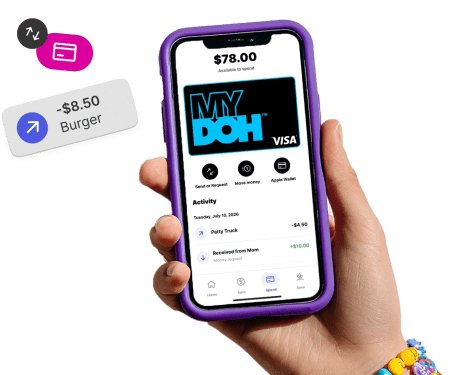
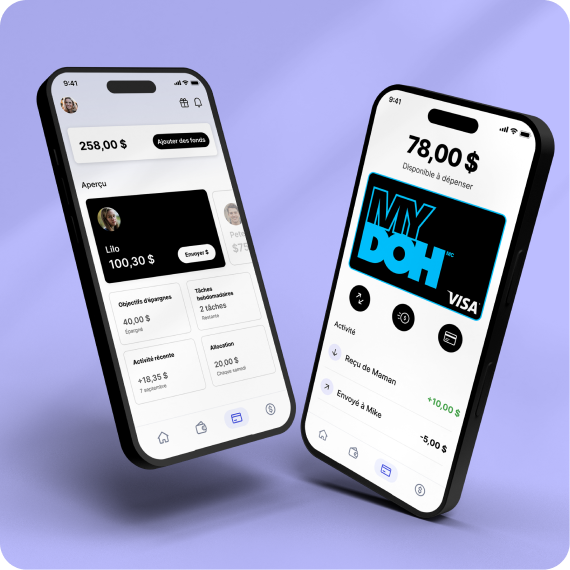
Mydoh helps kids learn money management in a safe, supervised way – features that work especially well for neurodivergent children:
Earning Through Tasks: Assign chores or tasks so children earn money based on responsibility and effort, understanding the connection between work and spending power.
Consistent Allowance: Set up regular allowances, providing consistent funds to practice saving, planning, and responsible spending.
Visual Savings Goals: Help children set targets and watch their progress, making financial learning visual and motivating.
Spending Tracker: Monitor purchases and learn to budget in a safe, supported environment.
Financial Milestones by Age
Every child develops at their own pace, but here are milestones to work toward:
Ages 6-12
- Open a digital savings account with caregiver support
- Practice earning, budgeting, and everyday spending with Mydoh
- Learn safe online shopping, including comparing prices and understanding shipping costs
Ages 13-18
- Build a budget using Mydoh to manage allowance or earnings, understanding real costs like school supplies or bigger goals
- Explore earning opportunities like babysitting or yard work, tracking income and spending
- Discuss future planning like post-secondary education or moving out
- Introduce credit concepts – even before access, teens can learn how interest and payment timelines work
Skills That Last a Lifetime
Teaching financial literacy to neurodivergent children builds more than money skills – it develops budgeting, saving, and responsible decision-making that last.
It also supports emotional regulation. Visual spending limits and waiting periods help children manage impulsive spending. These skills extend far beyond their bank account.
When you teach your child about money, you’re giving them tools for independence, confidence, and success in adult life.
Build Your Financial Confidence Here
The partnership between Mydoh and Autism Canada recognizes that every child learns differently – and that’s an opportunity to do better. With the right approach and tools, financial literacy becomes accessible, empowering, and even enjoyable.
Ready to start your child’s financial literacy journey? Mydoh makes it simple to begin teaching money management in a way that works for your family.
This article offers general information only and is not intended as legal, financial or other professional advice. A professional advisor should be consulted regarding your specific situation. While the information presented is believed to be factual and current, its accuracy is not guaranteed and it should not be regarded as a complete analysis of the subjects discussed. All expressions of opinion reflect the judgment of the author(s) as of the date of publication and are subject to change. No endorsement of any third parties or their advice, opinions, information, products or services is expressly given or implied by Royal Bank of Canada or its affiliates.