
Unfortunately, the opportunity and convenience enabled by our digital, device-driven world, also provides an environment where scammers can thrive. Whether you’re logging into a game, scrolling through social media, or clicking a link in a text, the threats are real — and they’re designed to look and feel legitimate.
In this guide, we’ll walk through the scams most likely to affect you right now, explain the psychology scammers use to get you to say yes, and give you practical tools to help protect yourself and your money.
Key Takeaways
- Confidence doesn’t equal protection. Young Canadians are among the most digitally savvy – and among the most likely to be scammed. The gap between feeling safe and being safe is exactly where fraudsters operate.
- Gaming scams are surging. Suspected fraud in video gaming rose 53% year-over-year in Canada in 2026 — and Roblox alone saw nearly 1.65 million cyberattack attempts in one year.
- E-transfers are irreversible. Once you send money via Interac e-Transfer, it’s almost impossible to get back — which is exactly why scammers love them.
- Social media and phishing top the list. These are the two most common channels scammers use to reach young Canadians.
- The “too good to be true” rule works. Scammers engineer excitement on purpose, to get you to act before you think. Pausing for even a few seconds changes the outcome.
- Canada’s fraud losses hit a record $704 million last year — and experts believe only 5–10% of scams ever get reported.
What is a financial scam?
A financial scam is when someone tricks you into handing over money, personal information, or account access, usually by pretending to be someone you trust, or by offering something too tempting to ignore. Scammers reach kids and teens through gaming chats, social media DMs, texts, emails, fake websites, and even messages that look like they’re coming from friends.
What makes scams so hard to spot is that they’re built to feel real. Fraudsters study the platforms you use, copy the way real brands talk, and trigger emotions like excitement or urgency to push you into acting before you think it through. But the more you understand how they operate, the harder it is for them to fool you.

7 scams to know about right now
1. Gaming scams
This is the one hitting closest to home for kids and teens in 2026. Gaming scams target players of popular games with promises of free in-game currency — or rare skins and items that never actually show up.
Here’s the typical playbook: a stranger contacts you through a game’s chat, comment claiming they can hook you up with free currency or exclusive items. All they need is your login, a visit to a third-party site, or a small payment upfront. The moment you hand over any of that, your account gets hijacked or your money disappears.
The scale of this problem is massive. In Canada, suspected digital fraud in video gaming surged 53% year-over-year in 2026 — the second-highest fraud rate of any digital industry targeting young players in a single year. And one in five kids who play games with in-game currencies has already spent real money on them, meaning there’s real money on the line.
The rule is simple: free in-game currency doesn’t exist outside official channels. Any third-party site or person claiming otherwise is running a scam.
If anything in a game ever asks for your login, a payment, or personal details, close the window and tell a trusted adult right away.
The rule is simple: free in-game currency doesn’t exist outside official channels. The only legitimate way to buy Robux is through Roblox.com. The only way to get V-Bucks is through the official Fortnite store. Any third-party site or person claiming otherwise is running a scam.
If anything in a game ever asks for your login, a payment, or personal details, close the window and tell a trusted adult right away.
2. Social media scams
Social media tops the list of channels scammers use to target younger Canadians. It’s where you spend your time, and it’s where scammers go to find their next target.
They might pose as a brand offering a giveaway, an influencer with an “exclusive” investment opportunity, or even someone who’s followed your account for a while before suddenly asking for money or personal details. In 2026, AI is making these scams even harder to catch — 79% of Canadians say AI is enabling fraudsters to create more convincing scams faster than ever before, including realistic fake profiles, deepfakes, and cloned brand accounts.
Common red flags: newly created accounts, messages that feel rushed or weirdly personal, prizes you don’t remember entering, or anyone asking you to click a link or send money to claim a reward. When in doubt, verify before you act, and never send money to someone you’ve only ever met online.
3. Phishing emails and texts
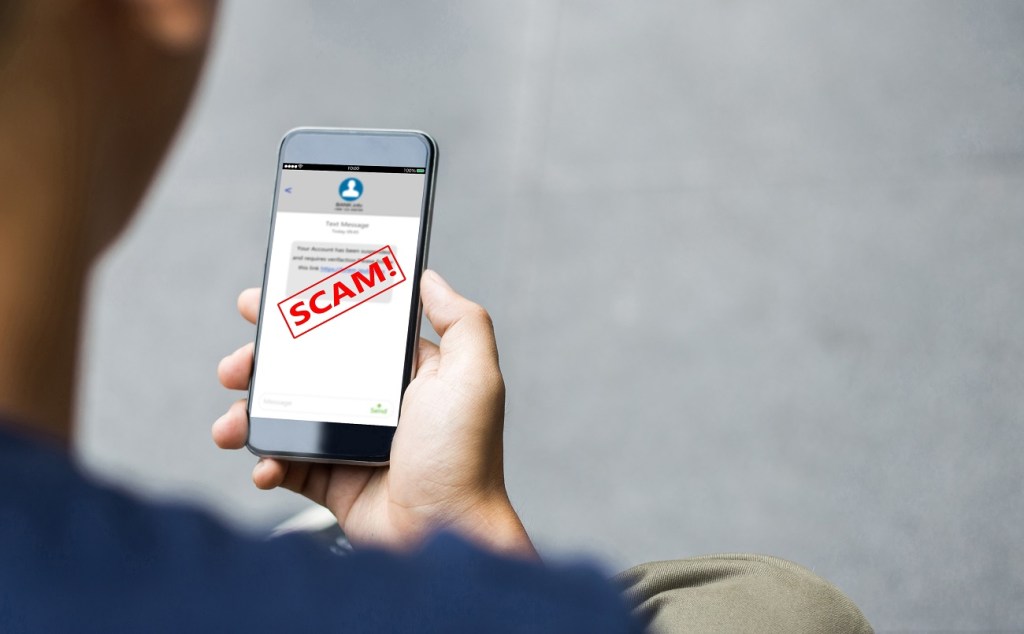
Phishing is when a scammer sends you an email or text that looks like it’s from a real organization (your bank, a streaming service, a delivery company, or even a social media platform) to trick you into clicking a link and handing over your login details or personal information.
A particularly relevant version right now: scammers are already using new social media age-verification rules as a pretext to send fake “account verification” messages to teens. The message looks official, creates urgency (“Verify your account or lose access!”), and sends you to a fake login page that harvests your credentials.
The tells: spelling errors, email addresses that don’t match the real company’s domain, links going to unfamiliar websites, and messages that pressure you to act immediately. Always go directly to a company’s website by typing the address yourself — never through a link in an unexpected message.
4. Interac e-Transfer fraud
E-transfers are fast, easy, and everywhere, which makes them a favourite tool for fraudsters. The single most important thing to know: once an e-transfer is deposited, it’s almost impossible to get back.
There are a few ways this plays out. In interception fraud, a hacker accesses your email, spots an e-transfer notification, and redirects the funds to their own account, before you even realize what happened. In social engineering scams, someone impersonates a friend, family member, or organization and creates urgency (“I need $50 right now, I’ll explain later”).
A common version targeting teens: someone “accidentally” sends you money and asks you to send it back. The original transfer was made with stolen credentials and eventually gets reversed — but the money you sent back is yours, and it’s gone for good.
Major Canadian financial institutions have flagged e-transfer interception fraud as a fast-growing threat. The rule: never send money to someone you don’t know and never refund a transfer you didn’t ask for.
5. Marketplace scams
Buy-and-sell platforms like Facebook Marketplace and Kijiji are great for finding deals, but also a hotspot for fraud. A scammer might list a product at a steep discount, ask for payment upfront, and vanish. Or they might pose as a buyer, send a fake payment confirmation, and ask you to ship before any money actually arrives.
Always meet in a public place for in-person exchanges. If you’re buying online, avoid prepaying to unverified sellers. A deal that feels rushed or a seller who’s pushing you to hurry is a warning sign worth taking seriously.
6. CRA scams
Canada Revenue Agency scams run year-round. Scammers impersonate the CRA by phone, email, or text, claiming you owe back taxes and threatening arrest or legal action if you don’t pay immediately.
The key fact: the CRA does not demand immediate payment by e-Transfer, gift card, or cryptocurrency — ever. If you get a message like this, hang up and contact the CRA directly through the official Government of Canada website.
7. Cryptocurrency scams
Crypto scams show up as fake investment platforms, fraudulent giveaways, and “guaranteed returns” pitches promising to multiply your money. Scammers love crypto because transactions are nearly impossible to reverse once completed.
Red flag: anyone promising huge, risk-free crypto returns — no legitimate investment can guarantee that. And if someone you’ve only ever met online starts nudging you toward a crypto opportunity, treat it as a major warning sign.
Taking precautions to prevent being scammed
Know the red flags. Urgency, secrecy, and “act now” pressure are the three biggest signs something is a scam. Scammers know that a few seconds of hesitation is their enemy.
Research before you trust. Got a message from your bank or a government agency? Don’t use the contact details in the message. Look up the official website yourself and reach out directly.
The “too good to be true” rule. Here’s the question that cuts through almost every scam, “If this is real, why is it being offered to me?”
Free from a stranger. A $500 prize you never entered. A job paying $200 an hour to click links. These feel exciting and that’s by design. Psychologists call it optimism bias: the tendency to believe good things will happen to us and bad things won’t. Scammers engineer their offers to trigger the fast, instinct-driven part of your brain — what researchers call “System 1 thinking” — so you act before the rational part catches up.
Luckily, the fix is simple: just slow down and ask yourself some questions. Does this make sense? Is there a real organization behind this? Would a legitimate business reach out this way? If you can’t answer yes, it’s probably not real.
Scams are evolving fast, but so is your ability to spot them. Every time you pause before clicking, double-check a message, or ask a trusted adult when something feels off, you’re doing exactly what scammers don’t want you to do. Keep that habit up, and your money stays right where it belongs: with you.
Download Mydoh and help build the foundation of financial literacy for your kids and teenagers.
This article offers general information only and is not intended as legal, financial or other professional advice. A professional advisor should be consulted regarding your specific situation. While the information presented is believed to be factual and current, its accuracy is not guaranteed and it should not be regarded as a complete analysis of the subjects discussed. All expressions of opinion reflect the judgment of the author(s) as of the date of publication and are subject to change. No endorsement of any third parties or their advice, opinions, information, products or services is expressly given or implied by Royal Bank of Canada or its affiliates.