



Filing taxes can feel daunting, especially when trying to optimize your family’s return. Fortunately, the Canadian government offers tax credits that can significantly reduce your tax burden.
With rising costs, understanding available benefits is more important than ever. This guide covers the key tax deductions Canadian families can claim to maximize savings.
Key Takeaways
- Filing Deadlines: April 30, 2026 for most Canadians; June 15, 2026 for self-employed (payment still due April 30)
- Child Care: Claim up to $8,000 per child under 7, $5,000 for ages 7-16, or $11,000 for children with disabilities
- Medical Expenses: Claim eligible expenses exceeding 3% of net income or $2,759 (whichever is less) at 14.5% federal credit
- CCB Payments: Monthly tax-free benefit for children under 18—must file taxes annually to continue receiving
- Provincial Fitness Credits: Available only in Manitoba, Newfoundland and Labrador, Quebec, and Yukon
- Caregiver Credits: Claim $2,499 to $7,525 for supporting dependents with physical or mental impairments
- Home Office: Deduct utilities, internet, and workspace costs if you work from home
- GST/HST Credit: Quarterly payments for families with modest incomes—automatic assessment when you file
What are tax deductions?
Tax deductions are amounts you subtract from your taxable income, reducing what you owe to the Canada Revenue Agency (CRA). Both federal and provincial/territorial deductions are available.
Why do tax deductions matter for families?
Tax deductions lower your taxable income, reducing what you owe or increasing your refund. For families, they’re particularly valuable for offsetting childcare, education, and medical expenses—helping stretch your budget further.

8 family tax deductions you could claim
Here’s an overview of each deduction, the criteria for eligibility, and the maximum amounts for 2025.
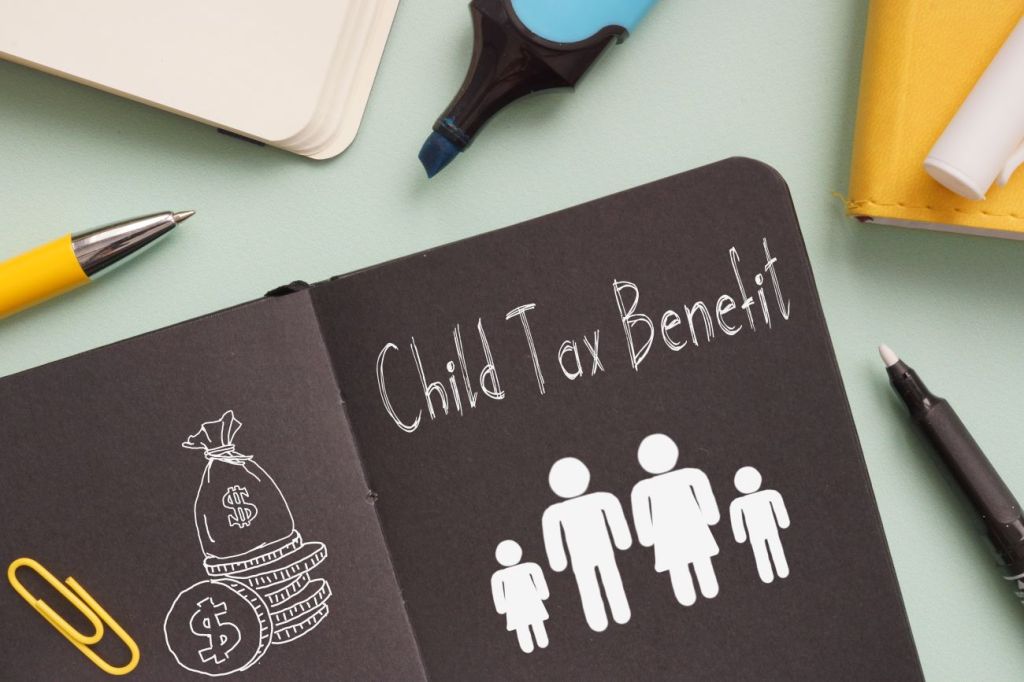
1. Canada child benefit (CCB)
The Canada child benefit (CCB) helps families with children under 18. Apply through birth registration, online at the CRA website, or by mail.
For shared custody arrangements, each parent receives 50% of the payment. Determine custody status based on your living arrangements to ensure proper payment allocation.
Calculate your CCB payments using the child and family benefits calculator. Payments arrive during the third week of each month. Both partners must file taxes annually to continue receiving benefits.
2. Child care expenses
Parents paying child care expenses to work, run a business, attend school, or conduct research may claim these costs. The child must be under 16 and dependent on you for support. Eligible expenses include caregiver payments, daycares, day camps, and boarding schools.
2025 claim amounts (CRA guidelines):
- $8,000 for children under seven
- $5,000 for children ages 7-16
- $11,000 for children with disabilities (eligible for Disability Tax Credit)
The total deduction cannot exceed two-thirds of the claimant’s earned income.
3. Eligible dependent amount
If you’re single, separated, divorced, or widowed and support a dependent living with you, you may qualify for this credit.
Eligible dependents include:
- Your parent or grandparent
- Your child, grandchild, or sibling under 18 or with a physical or mental impairment
Claim $2,499 to $7,525 depending on age and impairment status. Only one person per household can claim this amount. If needed, provide a medical practitioner’s statement describing the impairment’s onset and duration.
4. Canada caregiver credit
The Canada caregiver credit (CCC) supports those caring for family members with physical or mental impairments. The dependent must live with you and rely on you for basic necessities like food, clothing, and shelter.
Claim for:
- your (or your partner’s) child or grandchild
- your (or your partner’s) parent, grandparent, brother, sister, uncle, aunt, niece, or nephew
Amounts range from $2,499 to $7,525 based on relationship, net income, and other claimed credits. The CRA may request medical documentation.

5. Medical expenses
Claim medical costs for yourself, your spouse, and dependent children under 18. Eligible expenses include prescription drugs, dental services, fertility treatment, vision devices, and medical equipment.
Claim only amounts not covered by insurance. For 2025, enter the lesser of 3% of your net income or $2,759. The partner with lower net income should typically file this claim. The federal credit equals 14.5% of eligible expenses above the threshold.
Keep all receipts and prescriptions in case of audit. For a detailed list of eligible medical expenses, visit the CRA medical expenses page.
6. Children’s Fitness Tax Credit
This credit encourages physical activity for children. Available in Manitoba, Newfoundland and Labrador, Quebec, and Yukon only.
Eligible families must incur expenses for physical activity programs at the year’s start. Credit amounts vary by province.
Manitoba fitness tax credit
Claim up to $500 per child (ages 0-24). Receive $54 annually per child/young adult, doubled for those with disabilities. Programs must be supervised weekly for eight weeks or five consecutive days.

Newfoundland and Labrador physical activity tax credit
Receive up to $2,000 per family for eligible physical activity programs. Claim for yourself, spouse, or children under 18. Split between partners or claim the full amount.
Quebec tax credit for children’s activities
Families with income under $163,800 can claim for physical, recreational, artistic, or cultural programs. Claim up to $500 for a 20% tax credit ($100 per child). For children with impairments, claim up to $1,000 for $200 per child.
Yukon children’s fitness tax credit
Claim up to $1,000 per child under 16 for physical activity programs. Receive 6.4% of eligible fees ($64). Add $500 for children with disabilities under 18.
7. Home office expenses
Employees working from home can claim utilities (heat, water, electricity), minor repairs, internet, and rent. Commission-based employees may also claim home insurance, property taxes, and electronics leases.
Calculate expenses using the work from home detailed method with supporting documentation.
8. GST/HST tax credit
This quarterly tax-free payment helps families with modest incomes offset GST and HST costs. Automatic assessment when you file taxes. Amounts depend on family net income and number of children. Learn more about the GST/HST credit on the CRA website.

5 steps to claim tax deductions for your family
1. Search for tax deductions
Use the Government of Canada Benefits Finder tool to discover eligible benefits through a personalized questionnaire.
2. Understand eligibility criteria
Review specific conditions and requirements before submitting claims.
3. Gather necessary documentation
Collect receipts, medical notes, and payment proof the CRA may require.
4. Submit your filing with the CRA
For the majority of Canadians, the deadline to submit your tax return is April 30, 2026. If you are self-employed, you have until June 15, 2026 to submit your tax return.
Find more information on the CRA tax filing page.
5. Check for uncashed cheques
Billions in Canadian tax refunds remain uncashed. Verify through My Account on the CRA website.
High five for filing your tax return!
Once filed, celebrate your accomplishment! You’ve optimized your family’s tax return and accessed valuable benefits.
Share your tax filing process with your kids to teach them how expenses can be reimbursed through deductions. Early learning builds confidence for when they file their first return.
A smart way to teach your kids about tax deductions and finances
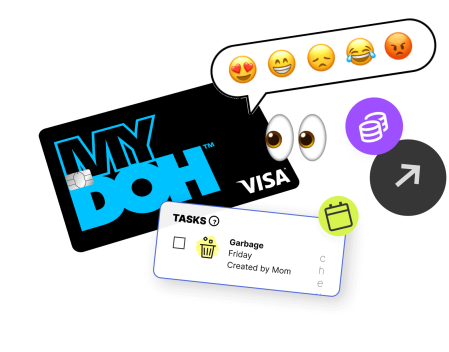
Beyond claiming deductions, teach your kids responsible money management and financial literacy. The Mydoh app and Smart Card for teens helps guide their financial journey with practical skills.
Download Mydoh today and give your family the gift of financial literacy.
This article offers general information only and is not intended as legal, financial or other professional advice. A professional advisor should be consulted regarding your specific situation. While the information presented is believed to be factual and current, its accuracy is not guaranteed and it should not be regarded as a complete analysis of the subjects discussed. All expressions of opinion reflect the judgment of the author(s) as of the date of publication and are subject to change. No endorsement of any third parties or their advice, opinions, information, products or services is expressly given or implied by Royal Bank of Canada or its affiliates.
Family FinanceAs It Should Be
No monthly fee means extra pocket change to go towards helping your kids earn, spend, and save.