
Key takeaways
- Start small, then scale up. Give kids one age-appropriate financial responsibility — lunch money for younger kids, weekly spending money for teens — rather than full control overnight.
- Let low-stakes mistakes happen. Nearly 1 in 5 parents (19%) struggle to step back, but small spending missteps are the most valuable teaching tools. Ask what they learned, not what went wrong.
- Hand over part of the back-to-school budget. Just 22% of parents expect kids to manage part of BTS shopping; give them a fixed slice (e.g., $30 for supplies, $100 for clothing) to practise trade-offs.
- Pair independence with guardrails. Agree on rules for independent purchases, when to check in, and how to spot scams — 33% of parents worry about unsafe online purchases.
- Turn September into a money routine. A quick weekly check-in (what they spent, saved, and learned) builds the habit; 67% of parents are already comfortable delegating savings.
- Make savings visual. Tools like Mydoh’s Save Bucket and Savings Goals turn delayed gratification into a tangible, trackable target.
Raising money-smart kids is a continuous journey, but back-to-school season offers the perfect opportunity to level up. While 87% of Canadian parents agree that money management is a vital skill for their kids, handing over control can feel daunting. In fact, nearly 9 in 10 Canadian parents hesitate to give their kids greater financial autonomy, according to new research from Mydoh.
Building financial confidence isn’t about handing over total freedom overnight — it’s about starting small, establishing a safe framework, and giving kids opportunities to practise along the way. To help families bridge the gap between intent and action, Mydoh is working with financial expert Vanessa Bowen to share actionable strategies for handing over the reins, setting smart guardrails, and turning everyday moments into opportunities to build money skills kids will carry well into the future.
Here are five strategies from financial expert Vanessa Bowen to help build your child’s financial independence this back-to-school season.
Start small, then scale up
Every new school year brings new responsibilities — from walking to school alone to managing homework — and financial responsibility should grow right alongside them. Rather than handing over complete control, choose one age-appropriate financial responsibility for your child to own.
For younger kids, that might mean managing their Friday lunch money or distinguishing between wants and needs when picking out supplies. For older kids and teens, it could mean taking charge of their weekly spending money, gift budgets for friends’ birthdays, or specific school purchases.
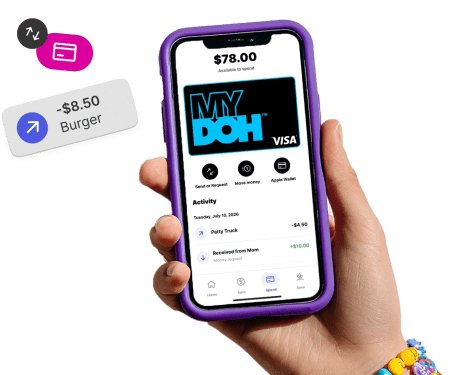
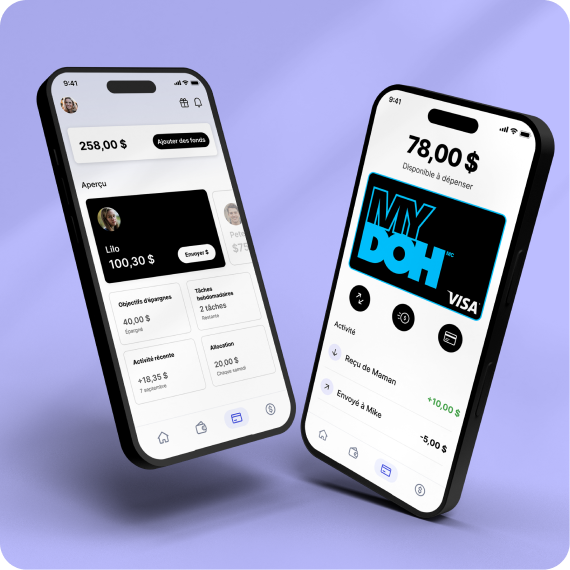
Tools like Mydoh make this transition smooth: kids can allocate their money into Spend and Save Buckets to see how much they have available to spend, while in-app Savings Goals give them a tangible reason to put some of their money aside.
Let the small money mistakes happen
Nearly one in five parents (19%) say they find it difficult to step back and allow financial mistakes. But when it comes to building financial judgment, low-stakes missteps in a safe environment are often the most valuable teaching tools available.
If your child spends their money too quickly, buys something they later regret, or doesn’t leave enough for something else they wanted, resist the urge to immediately fix it for them. Instead, use it as a teachable moment and talk through what happened:
- “What did you learn from that purchase?”
- “How did that choice affect the money you had left for other things?”
- “What might you do differently next time?”
Mydoh’s real-time transaction alerts give parents instant visibility into when purchases happen, making it easy to turn everyday spending moments into supportive, timely conversations without having to micromanage every decision.

Hand over part of the back-to-school budget
Just 22% of Canadian parents expect their child to manage part of the back-to-school shopping budget this year. Rather than putting them in charge of everything, give them ownership of one piece.
Give a younger child $30 to manage their own school supplies, or give an older teen $100 toward clothing and let them make the purchasing decisions within that limit. Working within a real budget gives kids a chance to weigh trade-offs, practise comparison shopping, and learn firsthand that spending more on one item means having less for something else.
Pair financial independence with guardrails
As kids become ready to take on bigger purchases or start shopping online, agree on a few simple rules together — like what they can buy independently, when they need to check with a parent, and how to recognize a suspicious website or offer.
This is particularly important as 33% of parents worry their child could be scammed or make an unsafe purchase online. Establish what the money needs to cover, when they need to check in with a parent, and how to recognize safe spending boundaries. As kids demonstrate strong judgment, you can gradually widen the parameters.
Mydoh helps put this balance into practice: the Mydoh card gives kids the opportunity to practise making their own spending decisions within set limits, while parents can stay informed through real-time notifications and step in when needed. It gives kids room to build confidence and learn from their choices, while ensuring they know when to ask for help.
Turn September into a money routine
Back-to-school is a natural reset for family schedules, bedtime routines, and extracurriculars, making it the perfect time to add a regular money routine to the calendar.
Establish a quick weekly family check-in — like every Sunday — where kids take the lead in reviewing:
- What they spent that week
- What they saved
- How they’re progressing toward their goals
- One thing they learned about money that week
Mydoh makes this routine effortless to maintain throughout the school year. Features like automated allowance transfers and visual tracking give families a simple, natural starting point for weekly money check-ins without adding complex administrative work.
Make savings goals visual and tangible
Saving for something they want is the financial activity parents feel most comfortable delegating, with 67% expecting their child to save during the school year. September is the ideal moment to build on that comfort and teach delayed gratification.
Using Mydoh’s Save Bucket and trackable Savings Goals, kids can set visual targets, allocate a portion of their allowance toward their goal each week, and watch their progress over time. Working toward a tangible reward helps kids practise trade-offs along the way, asking themselves: “Do I want this small purchase today, or the bigger goal I’m saving for?”
Frequently asked questions
At what age should kids start managing their own money? There’s no single right age, but back-to-school is a natural milestone. Younger kids can start with simple responsibilities like managing lunch money, while teens can take on weekly spending money. The key is to start small and scale up as their judgment grows.
Should kids manage their own back-to-school budget? Rather than handing over the entire budget, give them a portion to manage — try $30 to put toward a younger child’s school supplies or $100 for an older teen to put toward clothing. Working within a fixed limit lets them practise comparison shopping and learn about trade-offs.
What should I do when my child makes a money mistake? Let low-stakes mistakes happen rather than fixing them right away. Use the moment to ask what they learned and what they might do differently next time — small missteps in a safe environment are some of the most valuable teaching tools.
How do I protect my child from online shopping scams? Agree on a few ground rules together: what they can buy independently, when they need to check in with a parent, and how to spot a suspicious website or offer. This matters because 33% of parents worry their child could be scammed or make an unsafe purchase online.
How can I use Mydoh to teach my child to save money this back-to-school season? Use Mydoh’s Save Bucket and trackable Savings Goals to help your child set a visual target (like a new backpack or a pair of shoes) and allocate a portion of their allowance toward it each week. Watching their progress grow turns delayed gratification into a tangible, motivating habit.
How do I keep money lessons going all school year? Set up a quick weekly family check-in — Sunday works well — where your child reviews what they spent, what they saved, and one thing they learned about money that week. Tools like Mydoh’s automated allowance transfers and visual Savings Goals make the routine easy to maintain.
About Mydoh
Since 2021, Mydoh has been committed to helping parents raise money-smart youth. Mydoh began with the shared belief that money management isn’t something you are taught, as much as something you learn through experience — and that experience should start early.
Survey methodology
These findings are drawn from an online survey conducted by Prodege from August 7–11, 2026, on behalf of Craft Public Relations, commissioned by Mydoh. The survey included a total of n=1,000 Canadian parents with children ages 6–17.
This article offers general information only and is not intended as legal, financial or other professional advice. A professional advisor should be consulted regarding your specific situation. While the information presented is believed to be factual and current, its accuracy is not guaranteed and it should not be regarded as a complete analysis of the subjects discussed. All expressions of opinion reflect the judgment of the author(s) as of the date of publication and are subject to change. No endorsement of any third parties or their advice, opinions, information, products or services is expressly given or implied by Royal Bank of Canada or its affiliates.